Figures, dates and what the operator wants up front
- The figure
- from $2,875 per person
- Nights
- 9
- Season
- November to April
- At reservation
- 10 per cent at reservation
The operating company asks for ten percent of the figure when the reservation is confirmed, and the balance falls due sixty days before departure.
Fixed departures
- 17 to 26 November 2027
- 26 January to 4 February 2028
- 15 to 24 March 2028
These are dates, not a range to slide around. A departure with no date attached is a different kind of contract altogether and this office does not write those.
Inside the figure
- Nine nights of accommodation, two of them on an island
- All outings by motor pirogue with a local guide
- Breakfast daily and every evening meal
- Ground transport from and back to Dakar
- National park entry fees in the delta
Left out
- Flights to and from Senegal, which the figure does not cover
- Lunches on the two long transfer days
- Travel insurance of any kind, which this office does not sell
- Drinks, tips and personal spending
Nine nights on brackish water
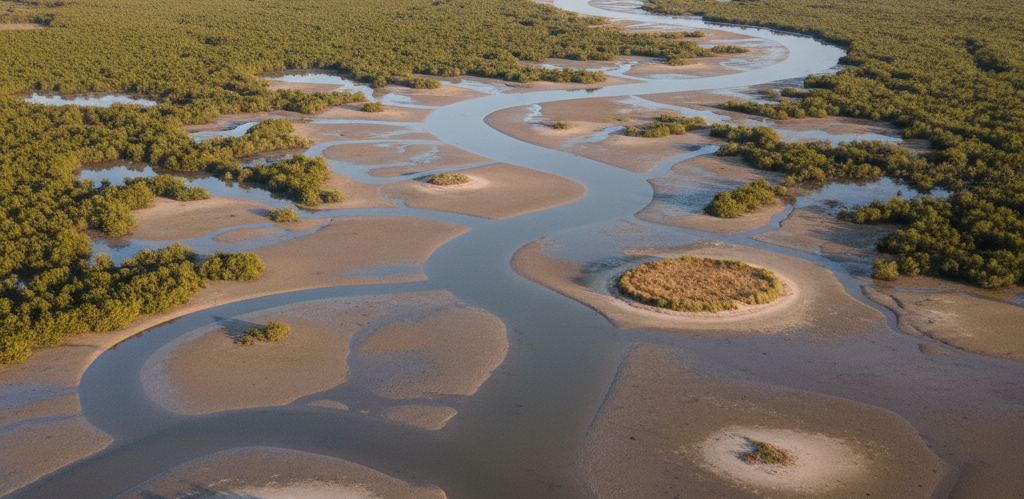
The delta sits about one hundred and eighty kilometers south of Dakar, where two rivers spread into a flat maze of tidal creeks. Local usage calls those creeks bolongs. There are hundreds of them, and at low water many are too shallow for a loaded pirogue.
The delta is an inverse estuary. Very little fresh water comes down the Saloum now, so the sea pushes in and evaporates, and the inner channels end up saltier than the ocean. That one fact explains most of what you see. Mangrove thins as you go inland. Bare salt flats, called tannes, take over, white and hard as a road by April.
The trip is based in two mainland villages and on one island. Movement between them is by pirogue, sometimes for two hours at a stretch. Nothing about the schedule is quick. Most mornings start before six, because the light and the birds are both better then, and because the tide will not wait for anyone.
Shell islands, made by people
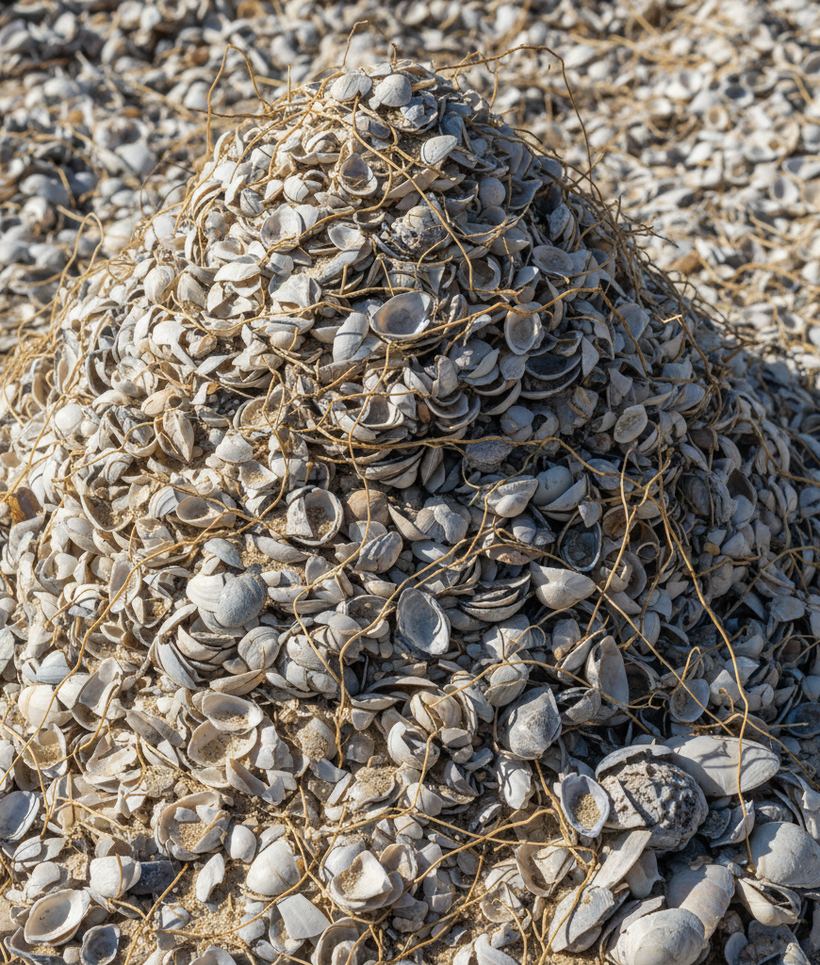
Parts of this delta are built out of shells. People here have eaten arch shells and oysters for two thousand years, and they piled the empties in the same places century after century. More than two hundred of these mounds are recorded. Twenty eight of them hold burials.
Some mounds run two hundred meters long and stand several meters above the water. You walk on them and the ground gives slightly and crunches, like coarse gravel that was once alive. Paths, house floors and cemetery walls are all made of the same material.
Two days go to the island villages, which stand on this ground and have no other. There is no stone in the delta. There is no hard rock at all. Everything solid that people stand on, they made themselves, or the tide made from mud. Look down and you can pick out single shells, whole and still hinged, packed edge to edge with fine sand in the gaps between them.
Count the birds, or just watch them
The delta holds one of the larger wintering grounds on this coast. Waders arrive from Europe in September and stay into March. Curlews, whimbrels, godwits and gray plovers work the sand banks at the river mouth, alongside several thousand terns. In the same water you get great white pelicans, goliath herons, ospreys and African fish eagles.
A guide who knows the colonies takes the group out on three mornings. The colony islands are approached slowly and never landed on. Nesting terns lift off the sand if a pirogue comes close, and an exposed egg cooks in this sun in about a minute, so distance is not a courtesy.
You do not need a list to enjoy this. Some people count. Some people sit under the canopy and watch one heron fish for twenty minutes. Both are ordinary here. Nobody on the trip will test you on plumage, and the guide will happily name the same bird four times.
Heat, wind and the tide decide
This is the honest part. The delta is hot, flat and exposed. From December into February a dry wind carries dust off the interior and grays the sky, and there are mornings when the horizon is simply not there. Photographers find that disappointing. By late March the haze clears and the heat climbs past thirty five degrees before midday.
There is very little shade on the water. Pirogues carry a canopy, but the glare comes off the surface as well as out of the sky.
Tides govern everything and the schedule bends to fit them. A departure can move by two hours the night before. On a low spring tide a channel that was open at eight is mud by four, and the crossing goes the long way around. Twice in the nine nights you should expect a day that does not happen as written. Fish is smoked in the villages, and near the racks the smell stays in clothing.
Where $2,875 else goes
This departure sits on the $2,875 rung, and it is not alone there. The office keeps every trip at that figure on one page so the number can be seen doing different work in different parts of the world. It does not rank them and will not tell you which is the better buy, because that is not a judgement a figure supports.
The same $2,875 somewhere else entirely
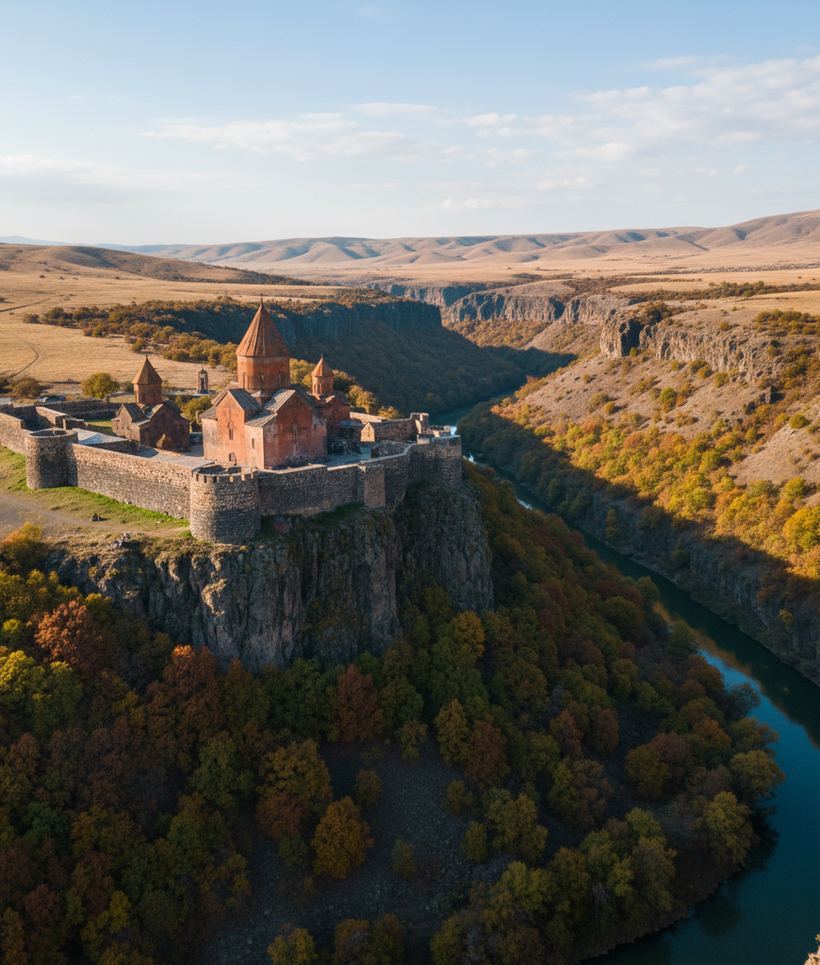
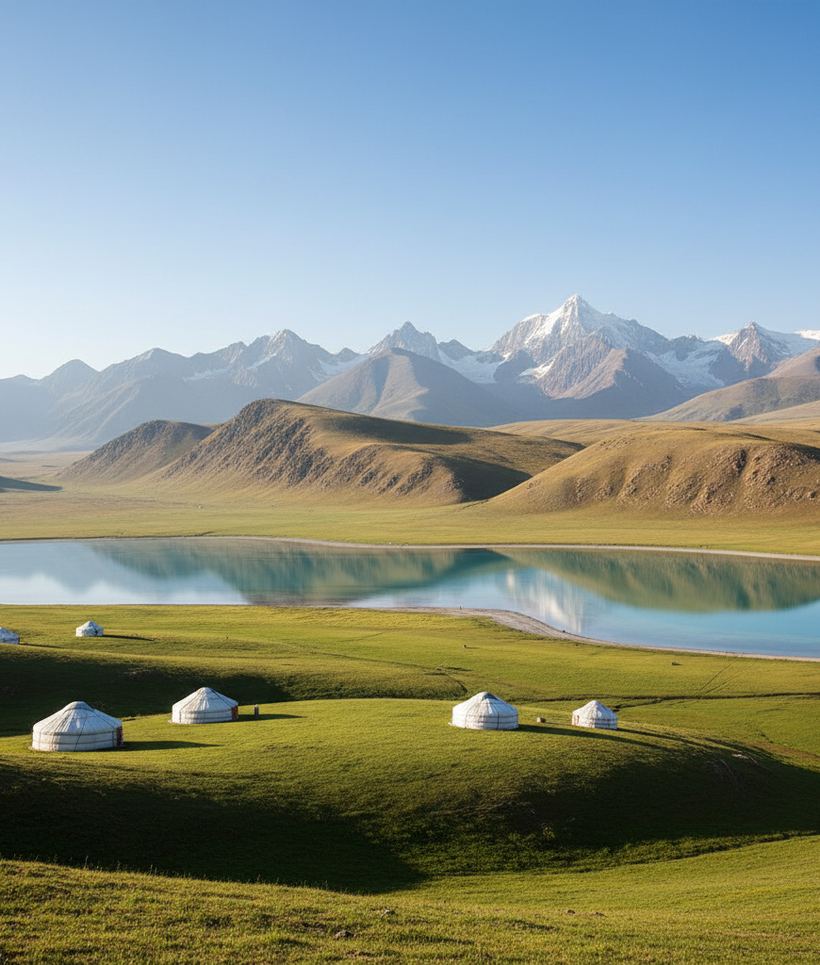
These 3 cost exactly what this one costs, and resemble it in nothing else. That is the point of filing a catalogue by figure. The office sets them out and leaves the choosing to you.
Start from the figure you actually have
Requests are taken every hour of every day. A person reads what this collects and writes back inside one business day. Money never changes hands here, and this office holds no card details of yours at any stage.
Orchard and Oar Bookings LLC
1401 E Broward Blvd, Suite 305Fort Lauderdale, FL 33301
+1 (954) 522-3140Calls run one way only: this office answers what reaches it and starts nothing of its own, by voice or by message.
reservations@orchardandoar.com
No opening times are posted. What is promised instead is the wait: a written request is answered inside one business day, and that is the undertaking the office will be held to.