Figures, dates and what the operator wants up front
- The figure
- from $2,875 per person
- Nights
- 9
- Season
- March to May, October, November
- At reservation
- 25 per cent at reservation
The operating company asks for a quarter of the figure when the reservation is placed and the balance eight weeks before the first walking day.
Fixed departures
- 28 March to 6 April 2027
- 2 to 11 May 2027
- 24 October to 2 November 2027
These are dates, not a range to slide around. A departure with no date attached is a different kind of contract altogether and this office does not write those.
Inside the figure
- Nine nights, five of them in camps on the route
- All meals from dinner on the first evening
- A local guide and a crew who move the camps
- Water carried and resupplied at every camp
- Two days of entry at Petra and the reserve fee at Dana
Left out
- Flights into and out of Amman
- Nights before or after the fixed dates
- Drinks and anything bought in villages
- Tips for the guide and the crew
Five walking days, about 45 miles
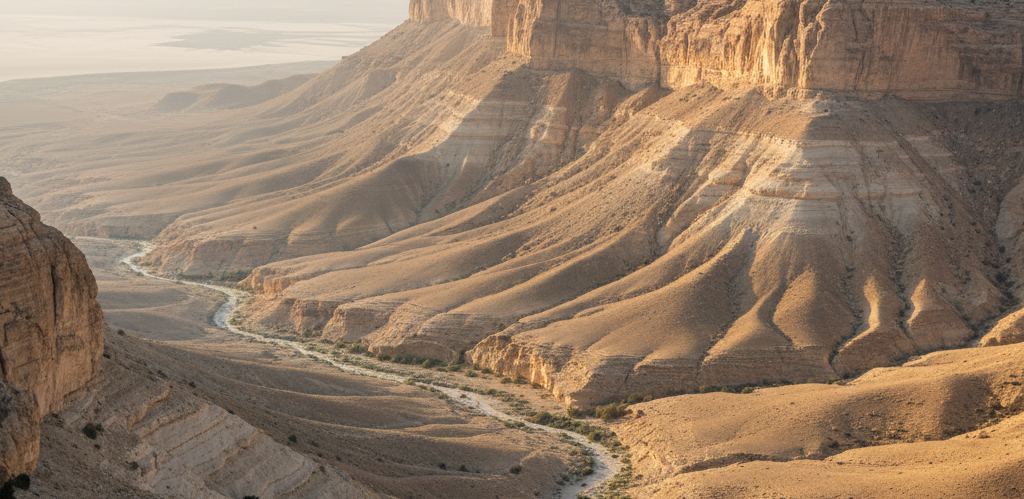
The route starts at Dana village, on the rim of the rift, and finishes at Petra. Five days are on foot and cover roughly 72 kilometers, about 45 miles. The reserve you begin in falls from around 1,500 meters at the rim to near sea level. The first morning gives away a good part of that height in one go.
What the profile hides is the climbing. After the first descent the line turns south, crossing one drainage after another. Days three and four each gain and lose several hundred meters. Total ascent across the week is far more than people expect from a walk called downhill.
Walking days run six to eight hours including stops. A crew moves the camps ahead of you. Where a track reaches they use a vehicle, and where none does they use mules. Two nights sit at either end of the walking, in simple hotels. Those are the nights with showers in them.
Copper slag at Feynan
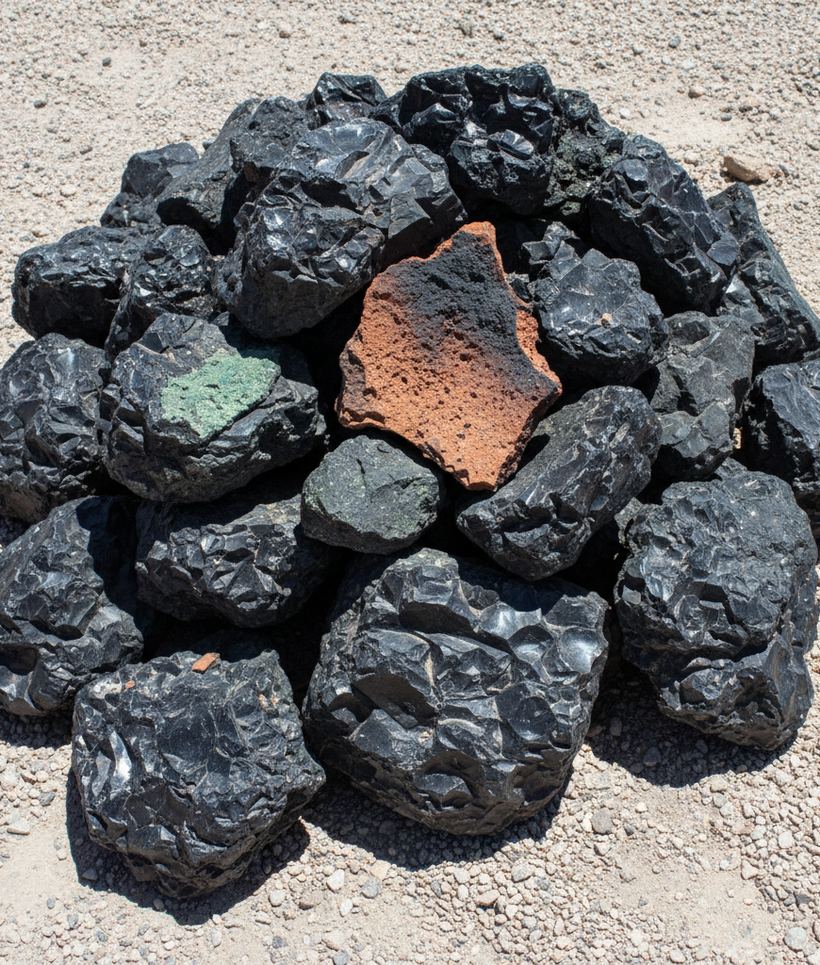
Around Feynan the ground is black in patches. Those patches are heaps of slag, the waste left when copper ore was smelted. In places they run meters deep. Copper was worked here from the fourth millennium before the common era. It was worked hard again in the Roman and Byzantine centuries. This is one of the oldest mining districts known anywhere.
Up close the slag is glassy and sharp, and fresh breaks show a green sheen. Ore fragments near it carry green and blue staining in the sandstone. There are lumps of fire reddened furnace lining, with the curve of the wall still readable in them.
The workings show as shafts and galleries cut into the hillsides. The ruins above the watercourse include a church. None of it is groomed, and nothing is fenced or signed. A guide is the difference between a black hill and an industrial landscape two thousand years old.
Arriving at the Monastery from behind
The last walking day begins at Little Petra, the small carved site north of the main basin. From there the path climbs onto the ridge, then drops south. It comes out at Ad Deir, the largest carved front at Petra, about 47 meters wide and 48 high. You reach it from above, having seen almost nobody for an hour.
Everyone else gets there by climbing more than 800 rock cut steps from the valley floor. Coming in from the north, you take those steps downward instead. That happens at the end of the week, on the way into the middle of the site.
From Ad Deir the day carries on past the theater and the tombs. It goes out through the Siq, so you see the famous entrance last rather than first. That is the reverse of the usual order. The site is busy from mid morning onward. After five days of empty country, the noise is a real change. A second day at Petra is in the figure.
Carry four liters and expect no shade
Water is the constraint. You carry three to four liters between camps, and the crew resupplies at each one. Springs on the route are seasonal and some run brackish, so they are not counted on. There is more water in March and April than in October.
Shade is the second constraint. Long stretches have none for two or three hours at a time. The rift floor holds heat well into the evening. Days above 90 degrees happen in April and again in October. Dana village, at the other end, sits high enough for a March night to reach freezing. The same duffel needs a sun hat and a warm layer.
Underfoot it is loose limestone and sandstone, with two or three descents that bring your hands out. Some sections are marked and some are not. If you turn an ankle on day three the way out is slow, because the nearest track is an hour or more from the line.
Where $2,875 else goes
This departure sits on the $2,875 rung, and it is not alone there. The office keeps every trip at that figure on one page so the number can be seen doing different work in different parts of the world. It does not rank them and will not tell you which is the better buy, because that is not a judgement a figure supports.
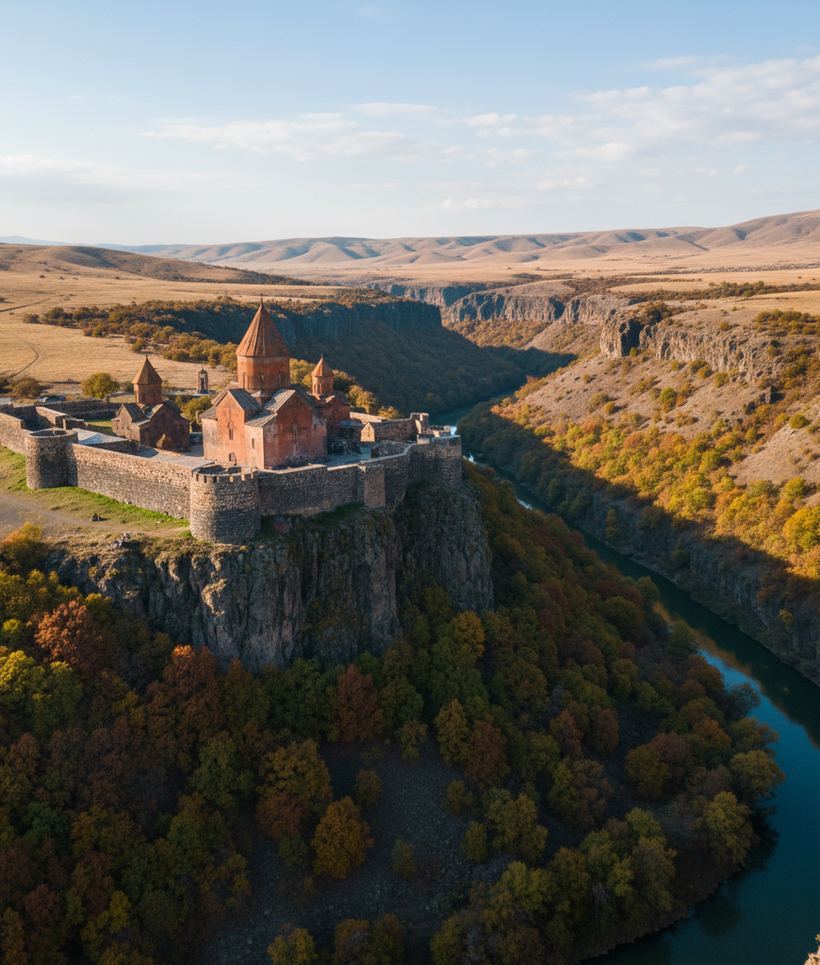
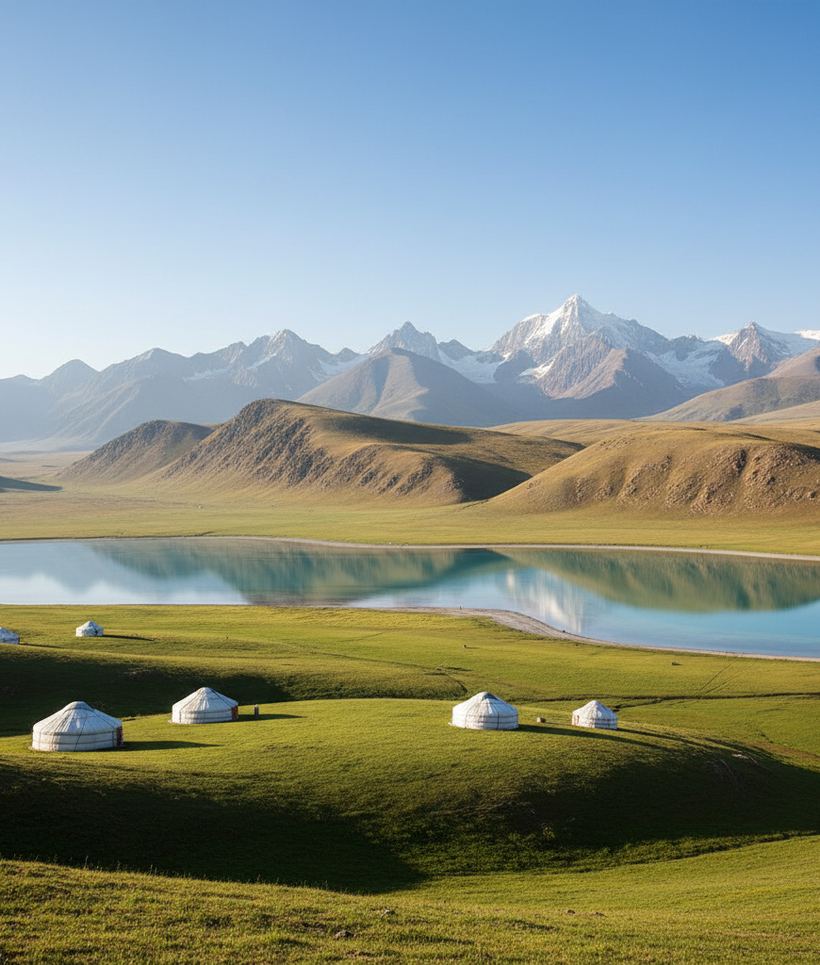
The same $2,875 somewhere else entirely
These 3 cost exactly what this one costs, and resemble it in nothing else. That is the point of filing a catalogue by figure. The office sets them out and leaves the choosing to you.
Start from the figure you actually have
Requests are taken every hour of every day. A person reads what this collects and writes back inside one business day. Money never changes hands here, and this office holds no card details of yours at any stage.
Orchard and Oar Bookings LLC
1401 E Broward Blvd, Suite 305Fort Lauderdale, FL 33301
+1 (954) 522-3140Calls run one way only: this office answers what reaches it and starts nothing of its own, by voice or by message.
reservations@orchardandoar.com
No opening times are posted. What is promised instead is the wait: a written request is answered inside one business day, and that is the undertaking the office will be held to.