Figures, dates and what the operator wants up front
- The figure
- from $4,190 per person
- Nights
- 8
- Season
- June to September, December to February
- At reservation
- 50 per cent at reservation
The operating company asks for fifty percent of the figure to hold the reservation, and the other fifty percent ninety days before departure.
Fixed departures
- 11 to 19 June 2027
- 20 to 28 August 2027
- 8 to 16 January 2028
These are dates, not a range to slide around. A departure with no date attached is a different kind of contract altogether and this office does not write those.
Inside the figure
- Eight nights, two sharing a room, at the forest edge and by the lake
- All breakfasts and evening meals, and lunches on tracking days
- Park fees, the chimpanzee tracking permit and the canopy walkway
- A driver and vehicle throughout, including the run from Kigali
- A park guide on every walk, and trackers on the chimpanzee mornings
Left out
- Flights to Rwanda, since the figure starts and ends in Kigali
- Drinks, laundry and tips
- The colobus walk on the free morning, if you add it
- A further attempt at the chimpanzees, which needs a further permit
Thirteen primates, and what each one looks like
Thirteen is the count for the park, and two of them are nocturnal. You will hear those and see little else of them. The one you are almost certain to meet is the Angolan colobus. It is black, with a long white cape down its back and a white tail. Here it moves in groups that can run past three hundred animals, which is not usual for the species anywhere else.
L'Hoest's monkey spends much of its time on the ground and carries its tail up in a hook. The grey cheeked mangabey stays high and gives itself away by voice. Red tailed, blue and silver monkeys share the same canopy and take practice to tell apart. Baboons work the edges near the tea fields.
Chimpanzees live in two separate places: the main forest, and a small remnant of forest to the west that holds a habituated group. The colobus is the reliable sighting. The chimpanzee is not, and the section below explains why.
The walkway hangs seventy meters over a ravine
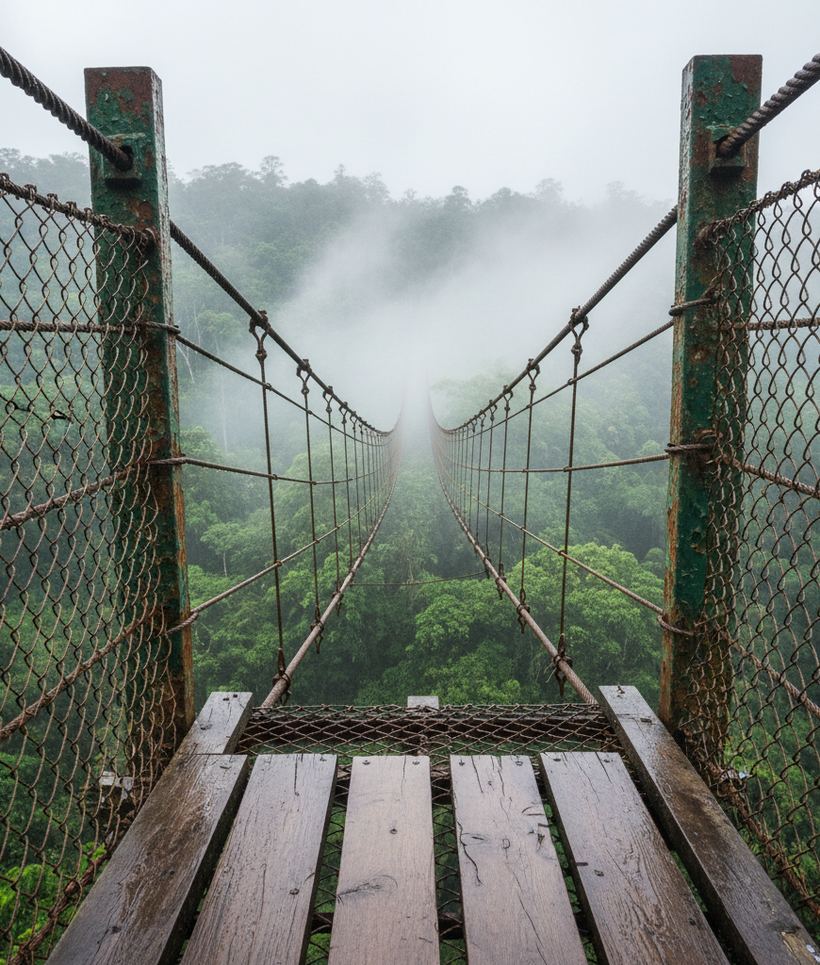
The canopy walkway runs about one hundred and sixty meters in linked spans. The highest of them is roughly seventy meters above the floor of a ravine. It is steel cable and mesh with a plank floor, and it moves under you. Some people find that harder to take than the height.
What it buys is eye level with the crowns. From the ground you look up into a ceiling and see silhouettes. From the middle span you look straight across at the level where the animals and most of the birds spend their day. Early morning is when that pays. By eleven the canopy has gone quiet and hot.
Getting there is an hour of steep steps down through the forest, and the same steps back up. The return is the harder half, and they are wet more often than not. Anyone whose knees dislike a long descent should say so when the reservation is made, because a shorter approach exists from the ridge.
Why do many groups come back without a chimpanzee?
Because the animals are wild, fast and high up. Trackers go out at first light to find where a group slept, and radio the position back. You leave at half past four or five and drive to the start. Then you walk toward a moving target on slopes that are steep and, for much of the year, mud.
Nyungwe takes around two thousand millimeters of rain a year. The drier months are only drier. Trails are slick, safari ants cross them in columns, and rain in the afternoon is normal even in July. When a group is found, the rule is one hour with them. That hour may be spent under a crown watching shapes move fifty meters up.
Some mornings give you a chimpanzee on the ground at ten meters. Some give calling and nothing seen. Nobody promises a sighting, the permit is not refunded when there is none, and a further attempt needs a further permit. That is the trip as it honestly is.
Allow six hours from Kigali, and take them in daylight
The park is about two hundred and twenty five kilometers from Kigali. The road is paved the whole way and it turns constantly, because this country is built out of ridges. Six hours is a fair estimate with a stop at Huye. Anyone who gets motion sick should sit in front and say so early.
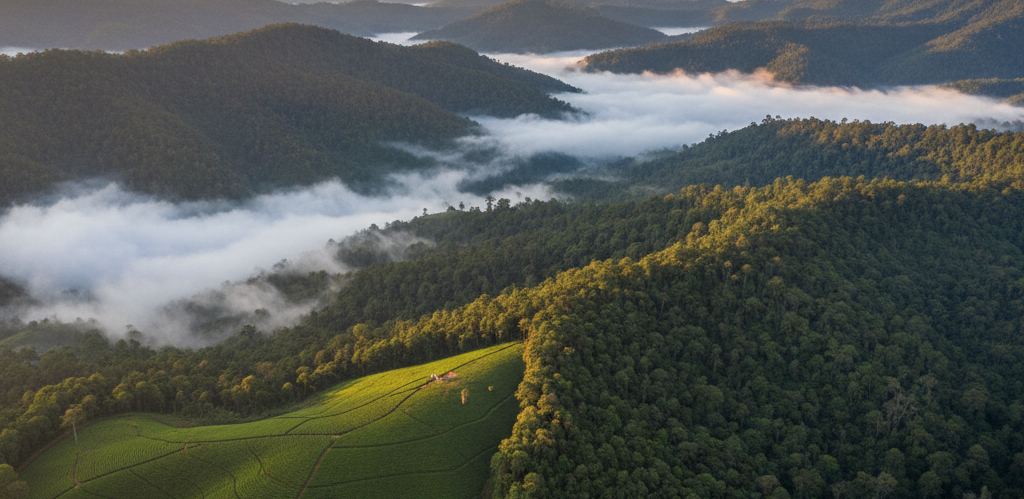
The last hour climbs. The forest boundary is abrupt: clipped green tea fields on one side, a wall of old growth on the other, planted that way on purpose. Beyond it the road runs along the ridge, with the Nile and Congo watersheds falling away on either side of you.
Rooms sit near two thousand meters and evenings are cold, which surprises people who packed for the equator. Bring a fleece, long sleeves for the ants, and boots you have already worn in. Nights are quiet apart from the frogs down at the marsh, which are not quiet at all.
Where $4,190 else goes
This departure sits on the $4,190 rung, and it is not alone there. The office keeps every trip at that figure on one page so the number can be seen doing different work in different parts of the world. It does not rank them and will not tell you which is the better buy, because that is not a judgement a figure supports.
The same $4,190 somewhere else entirely
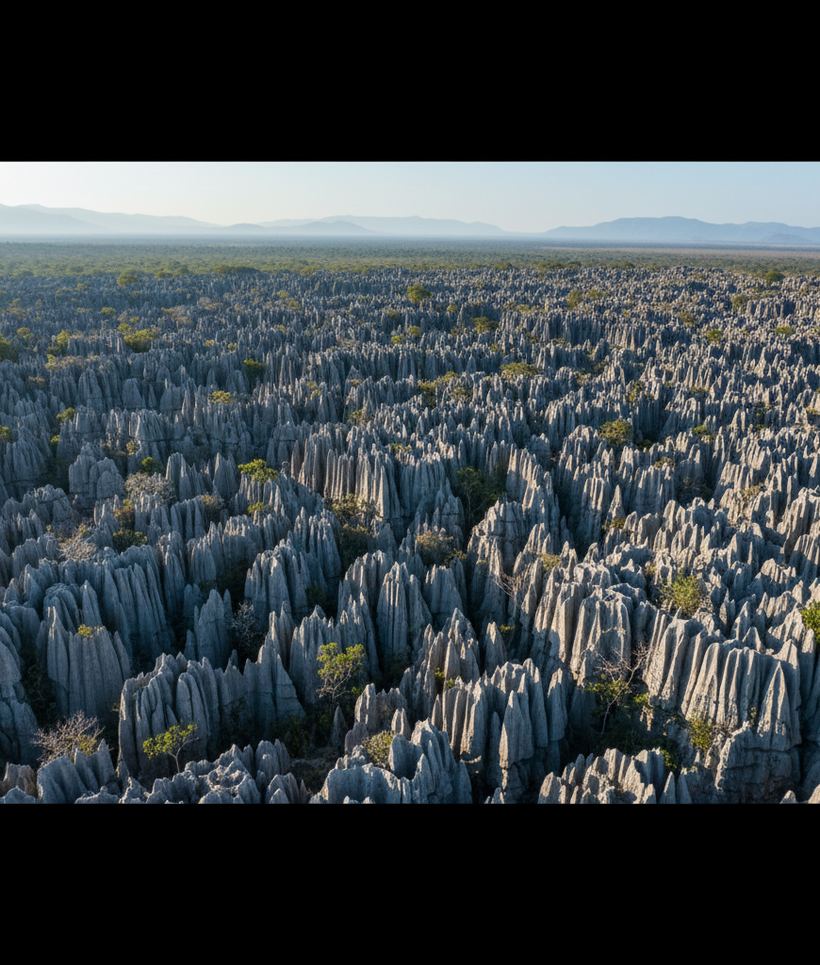
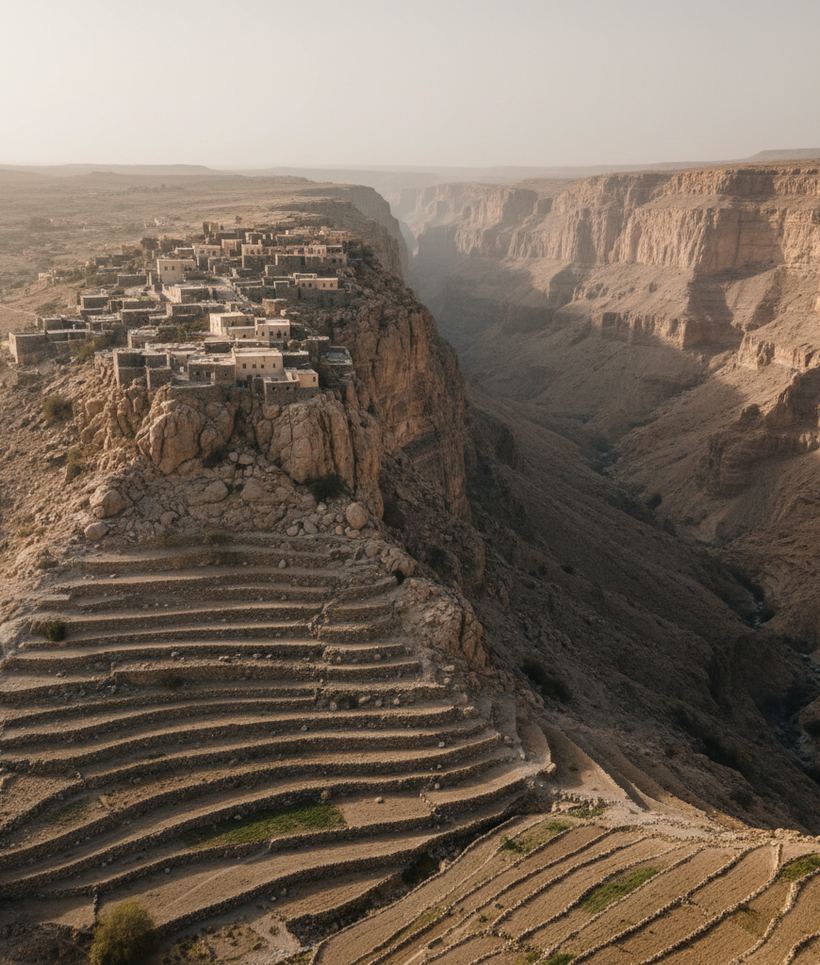
These 2 cost exactly what this one costs, and resemble it in nothing else. That is the point of filing a catalogue by figure. The office sets them out and leaves the choosing to you.
Start from the figure you actually have
Requests are taken every hour of every day. A person reads what this collects and writes back inside one business day. Money never changes hands here, and this office holds no card details of yours at any stage.
Orchard and Oar Bookings LLC
1401 E Broward Blvd, Suite 305Fort Lauderdale, FL 33301
+1 (954) 522-3140Calls run one way only: this office answers what reaches it and starts nothing of its own, by voice or by message.
reservations@orchardandoar.com
No opening times are posted. What is promised instead is the wait: a written request is answered inside one business day, and that is the undertaking the office will be held to.