Figures, dates and what the operator wants up front
- The figure
- from $1,960 per person
- Nights
- 8
- Season
- May to September
- At reservation
- 25 per cent at reservation
The operating company asks for twenty five percent of the figure when the reservation is confirmed, with the balance due eight weeks before departure.
Fixed departures
- 22 to 30 May 2027
- 3 to 11 July 2027
- 11 to 19 September 2027
These are dates, not a range to slide around. A departure with no date attached is a different kind of contract altogether and this office does not write those.
Inside the figure
- Eight nights in guesthouses at Kobarid and Bovec
- Breakfast daily and four evening meals
- A mountain guide on the four walking days
- Entry to the Kobarid museum and the Tolmin gorges
- Luggage moved between the two bases
Left out
- Flights to Slovenia or Italy, which are not in the figure
- Travel insurance
- Lunches, drinks and anything bought on the way
- The optional Mangart road day, priced locally
Where the color comes from
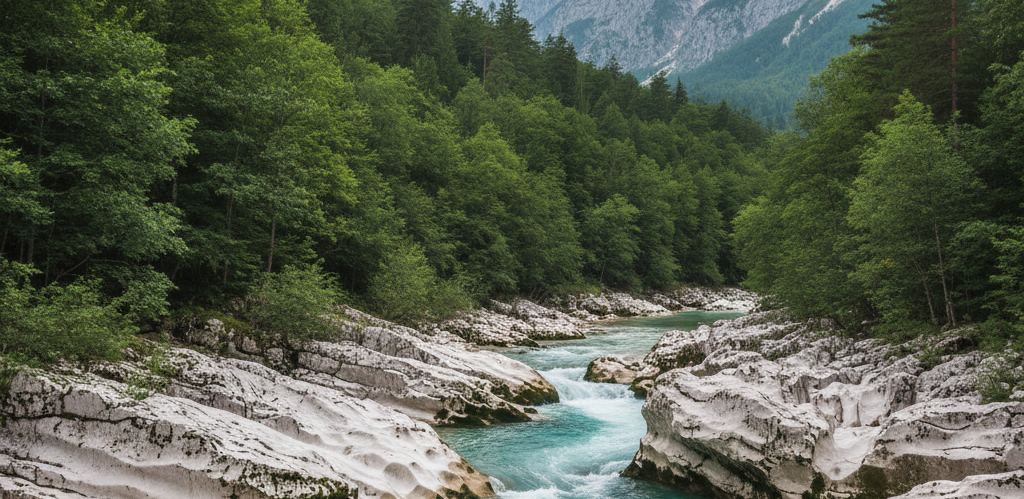
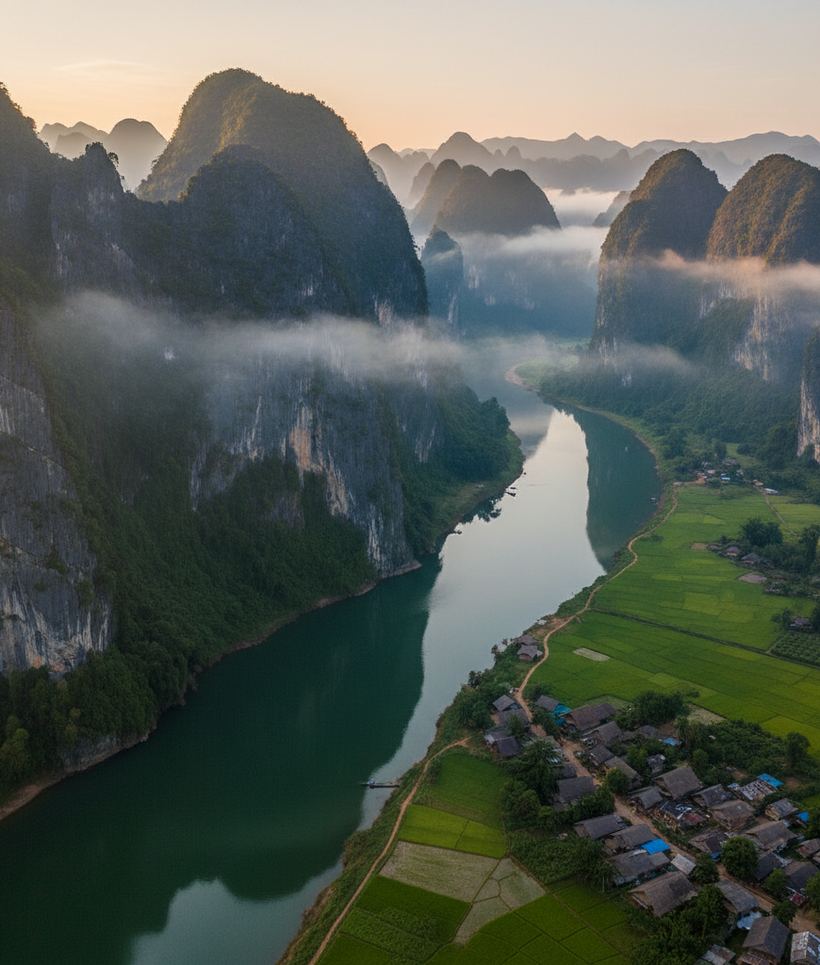
A walking trip in the Soca valley is largely an argument about one color. The river runs from Trenta to the Italian border, and for the first fifty kilometers it is a green that photographs as fake and is not. The rock is limestone. Fine ground powder from the high catchment stays suspended in the water and scatters the short wavelengths back at you. Clear water plus rock flour gives you that particular green.
The channel does the rest. Below Bovec the river has cut narrow slots into pale stone, three or four meters across in places, polished smooth by everything it has carried. You can stand on the lip and look straight down eight meters to gravel.
Two things follow from the same fact. The water sits at eight to ten degrees Celsius in August, because most of it was snow six weeks earlier. And it is loud in a way that carries. You hear the Soca from the road long before the woodland opens up and shows it to you.
A front line at two thousand meters
From 1915 to 1917 this valley was the Isonzo front. Twelve battles were fought along the river, the last of them in October 1917, when Austro Hungarian and German units broke through at Kobarid and pushed the Italian army back to the Piave.
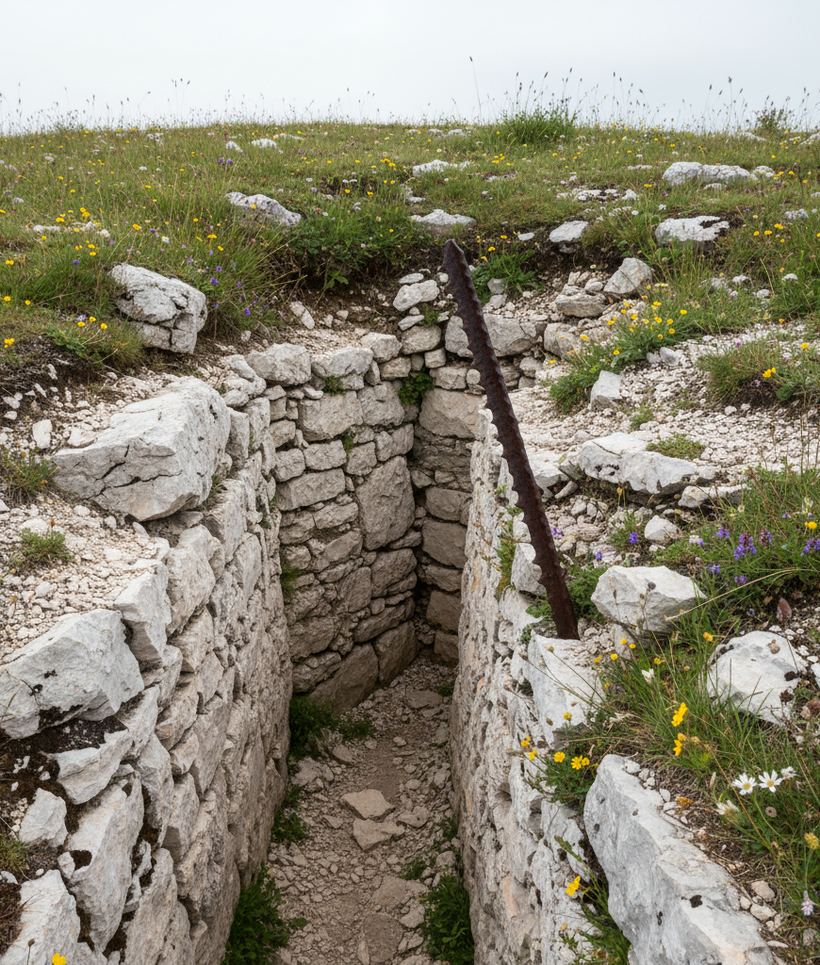
The evidence is still on the ground and nobody has tidied it. On the Kolovrat ridge above Tolmin the trench line is cut straight into limestone, with concrete gun positions, tunnelled shelters and iron pickets still standing in the grass. Krn, at 2,244 meters, was taken in a night attack in June 1915 and holds fortifications close to the summit.
Above Kobarid there is an Italian ossuary holding the remains of more than seven thousand men, most of them unidentified. The town museum holds the rest of the story, plainly presented and without much comfort in it. One walking day on this trip follows the marked route along the ridge. It is exposed the whole way and there is no water on it.
Kobarid to Tolmin on foot
The valley floor route runs about twenty kilometers between the two towns, and the trip walks it in a day with one short section on tarmac. It is not hard. Two hundred meters of climbing in total, most of it in the first hour.
The set pieces come early. The Napoleon bridge sits high over a slot in the rock north of Kobarid. Half an hour on is the Kozjak waterfall, which drops fifteen meters into a round chamber the water has hollowed out of the limestone, so the whole thing is lit from one side only. It is a five minute detour and everybody takes it.
Further down, the Tolmin gorges narrow to a few meters across, and a rock the size of a small car is jammed between the walls twenty meters up where a flood left it. The path is bolted to the side of the rock and wet all year. The handrails are there for a reason.
Count on rain, because the valley does
Bovec is one of the wettest inhabited places in Europe. The long term figure is around 2,700 millimeters a year, roughly four times what falls on London, and it arrives in short violent quantities rather than as drizzle.
The summer pattern is predictable and it still catches people out. Mornings are usually clear. By two in the afternoon cloud is building on the Kanin wall, and by four there is thunder somewhere in the basin. Ridge days therefore start early, and if the forecast is bad the guide moves the day, which means the itinerary you were given is a plan and not a promise.
Two other things. The river rises fast after a storm and the color goes from green to grey chalk for a day or two, so the photograph you came for may not be available on your dates. And from July the stretch below Bovec carries steady commercial river traffic from mid morning onward. If you want the quiet version of it, walk that section before nine.
Where $1,960 else goes
This departure sits on the $1,960 rung, and it is not alone there. The office keeps every trip at that figure on one page so the number can be seen doing different work in different parts of the world. It does not rank them and will not tell you which is the better buy, because that is not a judgement a figure supports.
The same $1,960 somewhere else entirely
These 3 cost exactly what this one costs, and resemble it in nothing else. That is the point of filing a catalogue by figure. The office sets them out and leaves the choosing to you.
Start from the figure you actually have
Requests are taken every hour of every day. A person reads what this collects and writes back inside one business day. Money never changes hands here, and this office holds no card details of yours at any stage.
Orchard and Oar Bookings LLC
1401 E Broward Blvd, Suite 305Fort Lauderdale, FL 33301
+1 (954) 522-3140Calls run one way only: this office answers what reaches it and starts nothing of its own, by voice or by message.
reservations@orchardandoar.com
No opening times are posted. What is promised instead is the wait: a written request is answered inside one business day, and that is the undertaking the office will be held to.