Figures, dates and what the operator wants up front
- The figure
- from $6,880 per person
- Nights
- 11
- Season
- November to March
- At reservation
- 25 per cent at reservation
The operating company asks for twenty five percent of the $6,880 at reservation, which is $1,720, with the remaining $5,160 due sixty days before departure.
Fixed departures
- 21 November to 2 December 2027
- 12 to 23 January 2028
- 4 to 15 March 2028
These are dates, not a range to slide around. A departure with no date attached is a different kind of contract altogether and this office does not write those.
Inside the figure
- Eleven nights of accommodation, two sharing a room
- All road transport within the province, with a driver
- Breakfast and an evening meal daily, plus food carried on the long road days
- Entry to Los Glaciares and to the petrified trunks at Jaramillo
- An English speaking guide with the group throughout
Left out
- Flights into Argentina and the internal flight south, which the operating company arranges separately under its own agreements
- Midday meals on the days that pass through towns
- Travel insurance, which this office does not sell and cannot advise on
- Optional lake excursions, which the operating company sells separately on the day
Wind is the first thing and the last
An eleven night steppe trip in Santa Cruz is organized around wind, whether or not the itinerary admits it. The westerlies run all day and most of the night, commonly at forty to sixty kilometers an hour, gusting past a hundred through November, December and January. It does not build and drop the way wind does in other places. It is simply on.
What that means in practice is small and constant. You shout to be heard three meters away. You eat indoors. Doors get taken out of your grip and grit finds the inside of every bag. Two or three days of it leaves most people flat and a little deaf. The operating company calls off its lake excursions when it blows hard, which is roughly one afternoon in five. The shrubs have been shaped by it, all leaning the same way with bare wood on the western side.
Twelve hundred kilometers of road in eleven nights
Distance is the second fact. Santa Cruz province covers about 244,000 square kilometers and holds around 330,000 people, most of them in three or four towns on the coast. The interior is close to empty. An itinerary taking in the icefield edge, the middle steppe and the stone logs runs to something like 1,200 kilometers of driving.
Route 40 carries most of that. Long stretches are paved now, but ripio remains, loose gravel laid on a raised bed, and on ripio the working speed is sixty rather than a hundred. Fuel comes at 150 to 250 kilometer intervals and those gaps are not negotiable. Two of the days are five hours in a vehicle with two stops. That is the honest shape of the thing. The driving is not filler between the places; it is a large part of what these days are made of.
What the ice does at its own edge
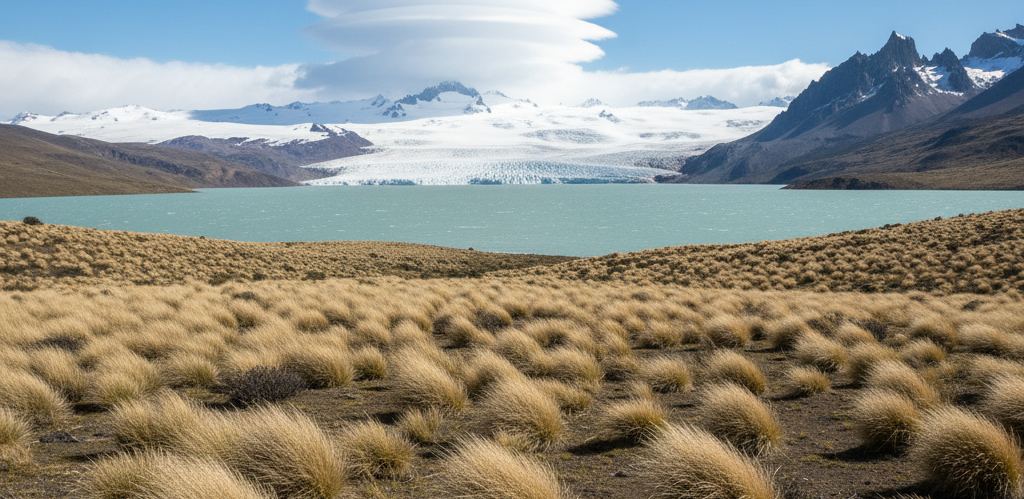
The Southern Patagonian Icefield lies along the border with Chile, about 350 kilometers from end to end and something over 12,000 square kilometers in area. Outside the polar regions there is no larger continuous body of ice in the southern hemisphere. You never see the icefield itself from the steppe. You see its outlets, some thirty glaciers that come down through gaps in the range and finish in lakes.
Perito Moreno ends in a face around five kilometers wide standing about seventy meters above the water. Every few years it advances far enough to close off one arm of Lago Argentino. The water behind it rises, and eventually the ice dam gives way. That happened in 2016, in 2018 and again in 2024, and it cannot be scheduled. What you can rely on is the noise. Ice comes off the face at intervals all day, and the sound arrives a couple of seconds after you see it go.
Stand next to a trunk that turned to stone
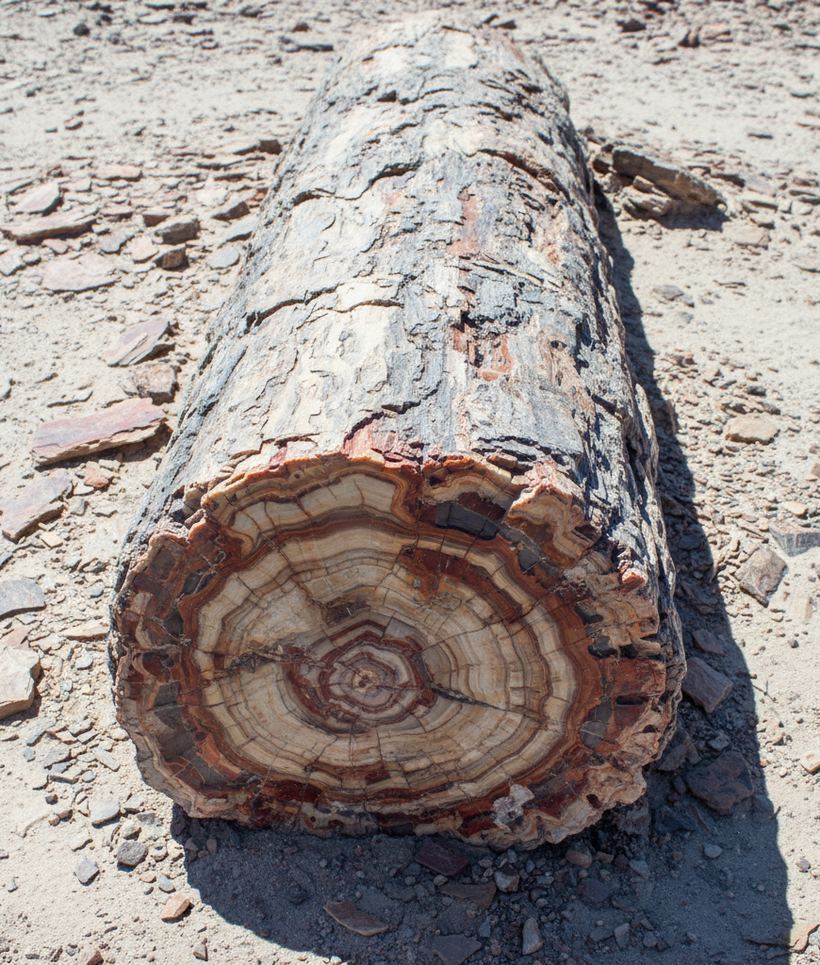
About 150 million years ago araucaria stood on this ground, and the young Andes buried them in ash. Silica in the groundwater went into the wood cell by cell and replaced it. What is left lies out on the open steppe near Jaramillo. Trunks up to thirty five meters long and three meters across sit more or less where they fell, with nothing taller than a low shrub for kilometers in any direction.
Up close the detail is finer than photographs suggest. Growth rings are still countable. The outer surface survives in places as a rough gray crust. Where the silica went in slowly it came out as agate, so a broken end can be banded cream, rust and dark red, and it takes a polish from wind and grit alone. The ground around each trunk is loose chips of the same material, and every chip stays where it is.
Where $6,880 else goes
This departure sits on the $6,880 rung, and it is not alone there. The office keeps every trip at that figure on one page so the number can be seen doing different work in different parts of the world. It does not rank them and will not tell you which is the better buy, because that is not a judgement a figure supports.
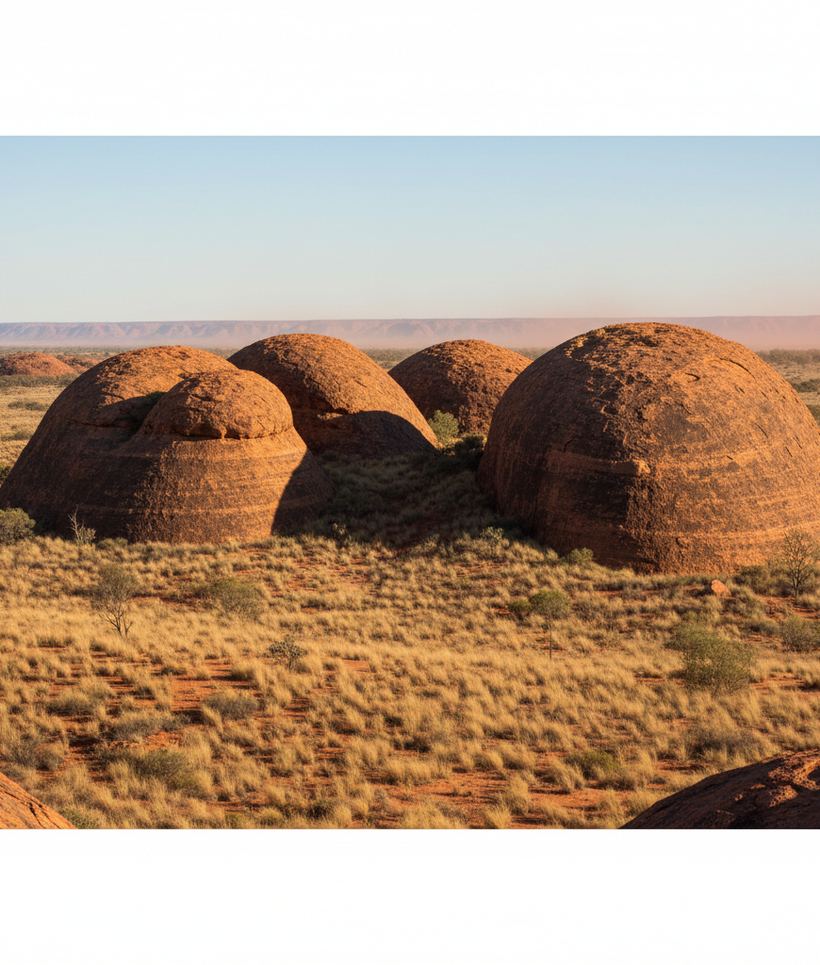
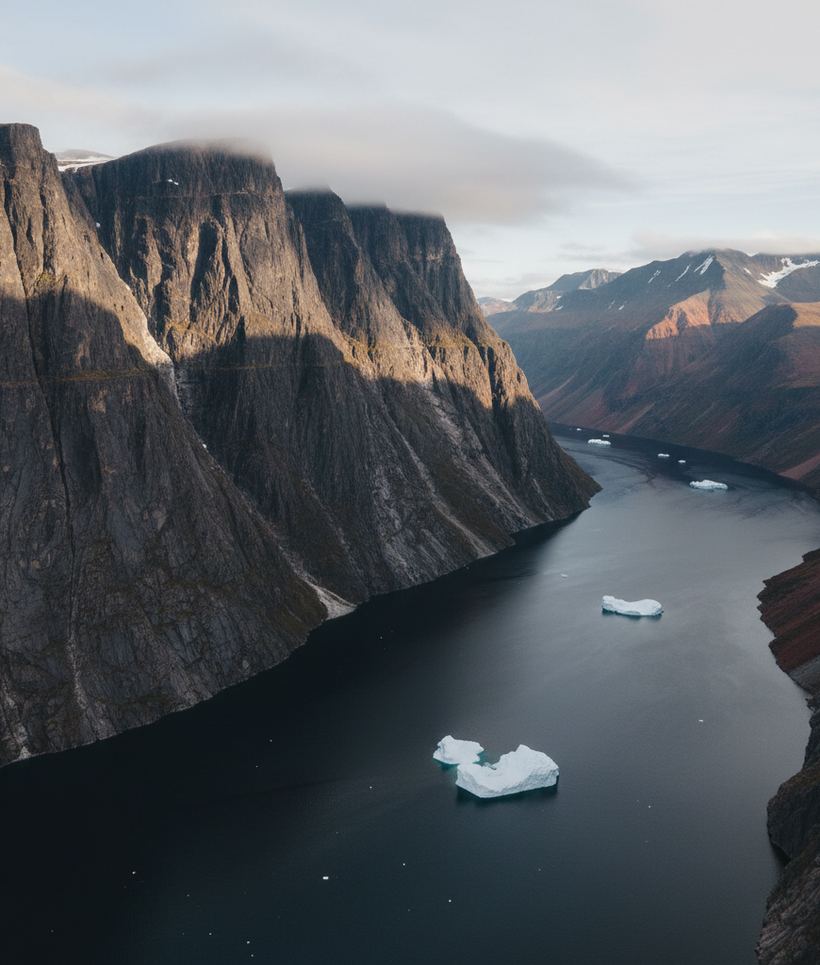
The same $6,880 somewhere else entirely
These 2 cost exactly what this one costs, and resemble it in nothing else. That is the point of filing a catalogue by figure. The office sets them out and leaves the choosing to you.
Start from the figure you actually have
Requests are taken every hour of every day. A person reads what this collects and writes back inside one business day. Money never changes hands here, and this office holds no card details of yours at any stage.
Orchard and Oar Bookings LLC
1401 E Broward Blvd, Suite 305Fort Lauderdale, FL 33301
+1 (954) 522-3140Calls run one way only: this office answers what reaches it and starts nothing of its own, by voice or by message.
reservations@orchardandoar.com
No opening times are posted. What is promised instead is the wait: a written request is answered inside one business day, and that is the undertaking the office will be held to.