Figures, dates and what the operator wants up front
- The figure
- from $3,420 per person
- Nights
- 12
- Season
- October, November, March, April
- At reservation
- 50 per cent at reservation
The operating company asks for half the figure when the reservation is confirmed, and the balance falls due forty five days before departure.
Fixed departures
- 13 to 25 October 2027
- 8 to 20 November 2027
- 22 March to 3 April 2028
These are dates, not a range to slide around. A departure with no date attached is a different kind of contract altogether and this office does not write those.
Inside the figure
- Twelve nights of village guesthouse lodging
- Conservation area permit and the trekking registration card
- A guide, and one porter for every two walkers
- All meals on the walking days
- Road transfer from Pokhara to the trail and back
Left out
- Flights to and from Nepal, which the figure does not cover
- The flight or drive between Kathmandu and Pokhara
- Travel insurance of any kind, which this office does not sell
- Hot water, charging and drinks at the guesthouses
Twelve nights at village pace
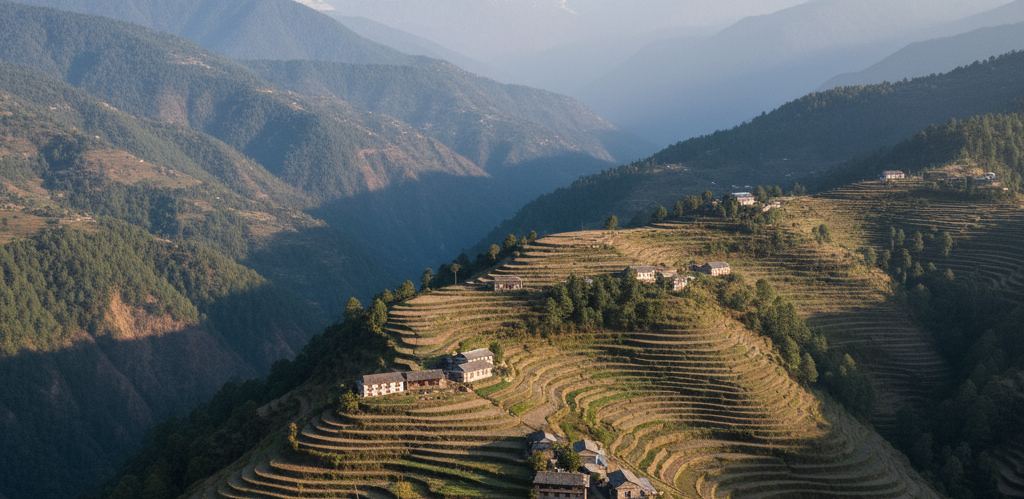
The route stays low. Nothing on it goes above three thousand two hundred meters, and most nights fall between one thousand five hundred and two thousand nine hundred. That is deliberate. The interest here is not altitude. It is what people have built on a very steep hillside over several hundred years.
Days are short by trekking standards, four to six hours, with long stops. Villages come every two or three hours: Dhampus, Landruk, Tolka, Ghandruk, Ulleri, Ghorepani. Houses are stone under slate, whitewashed at the base, standing in tight lines along the contour.
Above roughly two thousand meters the farmland gives out and forest starts. Oak and rhododendron, moss on every branch, and in late March and April the rhododendron is in flower and red enough to read from the far side of the valley.
The big peaks sit behind all of it. Annapurna South stands at seven thousand two hundred and nineteen meters, and Machhapuchhre at six thousand nine hundred and ninety three.
Water, stone and terraces
A terrace is a piece of engineering that nobody signed. The hillsides around Ghandruk carry hundreds of them. Each one is level, each is held up by a dry stone wall, and each is fed by a channel cut along the contour from a stream higher up.
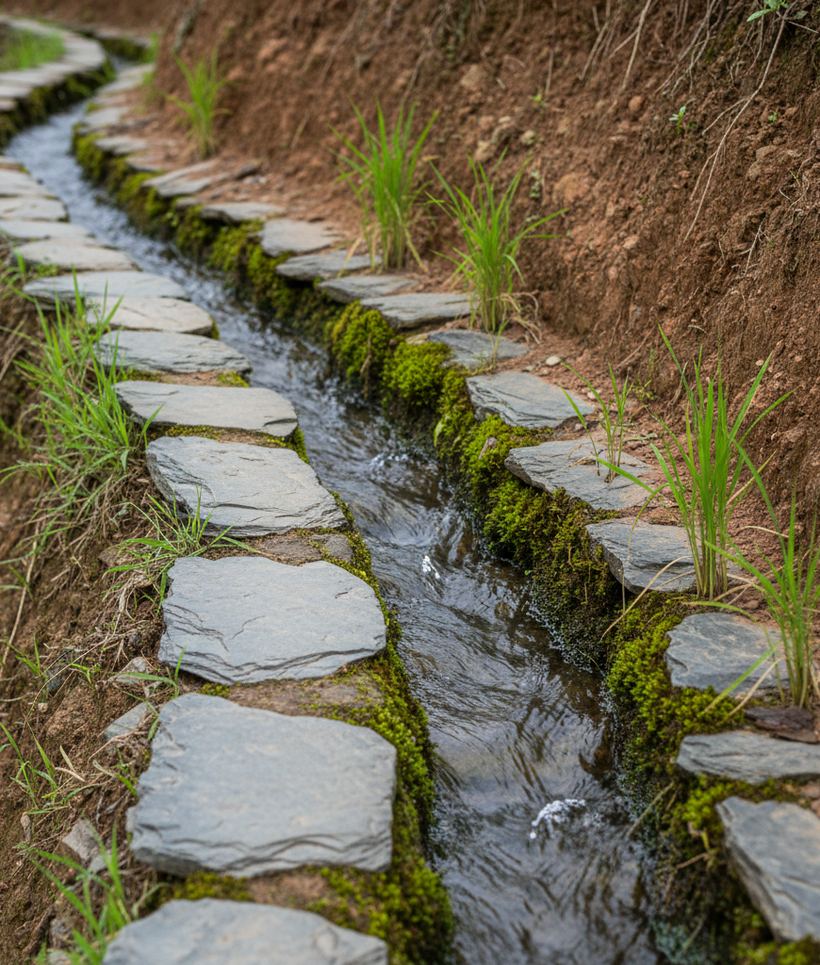
Water runs the whole system. It is taken off a stream, carried a kilometer or more at almost no gradient, dropped from terrace to terrace through gaps in the walls, and returned to the river lower down. Rice grows below about one thousand eight hundred meters. Above that it is millet, maize and buckwheat, because the water will not reach and the season is too short.
You walk beside these channels for hours. They are lined with slate, the joints are green with moss, and the sound never stops. Repair is constant and visible: fresh stone against weathered stone, a plank over a break, a plastic pipe where a wall has gone. Old water mills still stand on the bigger streams.
Stairs, and more stairs
Between Tikhedhunga and Ulleri there are more than three thousand stone steps inside about one and a half kilometers of horizontal distance. They are not even. Some are ankle high and some come to mid thigh. Most people take two to three hours over them, and it is the hardest morning of the twelve.
Descents are worse than climbs. The drop from Ghorepani through Tadapani to Ghandruk loses more than one thousand three hundred meters, nearly all of it on steps. Poles help. Cartilage does not grow back.
Dust is the other complaint. Roads now reach Ghandruk and climb toward Ulleri, so a few sections that were quiet trail ten years ago are shared with jeeps. Where that happens the walking is unpleasant for an hour or two.
Poon Hill at dawn is not solitude. Several hundred people stand on a small summit in the dark, and in spring the view is often gone by nine in the haze.
Who lives on these ridges?
Ghandruk is a Gurung village. Landruk and Tolka are mixed Gurung and Magar. Both peoples have sent soldiers to foreign regiments for two hundred years, and pension and remittance money paid for a good deal of the roofing you walk past.
The other economy is walkers. A guesthouse in Ghandruk is full in October and empty in July, when the family is out farming. Both halves of that year are real, and the second half is invisible to visitors.
School numbers in these villages are falling. Families move to Pokhara for secondary education and often do not move back. Several houses on the route are shut, shutters wired closed, the terraces below them uncut for a season or two. Nobody is going to tell you that this is charming.
Evenings are early. Walls are plywood and you hear your neighbors. Heat is one stove in the common room, lit at six, and it goes out when the last person leaves.
Where $3,420 else goes
This departure sits on the $3,420 rung, and it is not alone there. The office keeps every trip at that figure on one page so the number can be seen doing different work in different parts of the world. It does not rank them and will not tell you which is the better buy, because that is not a judgement a figure supports.
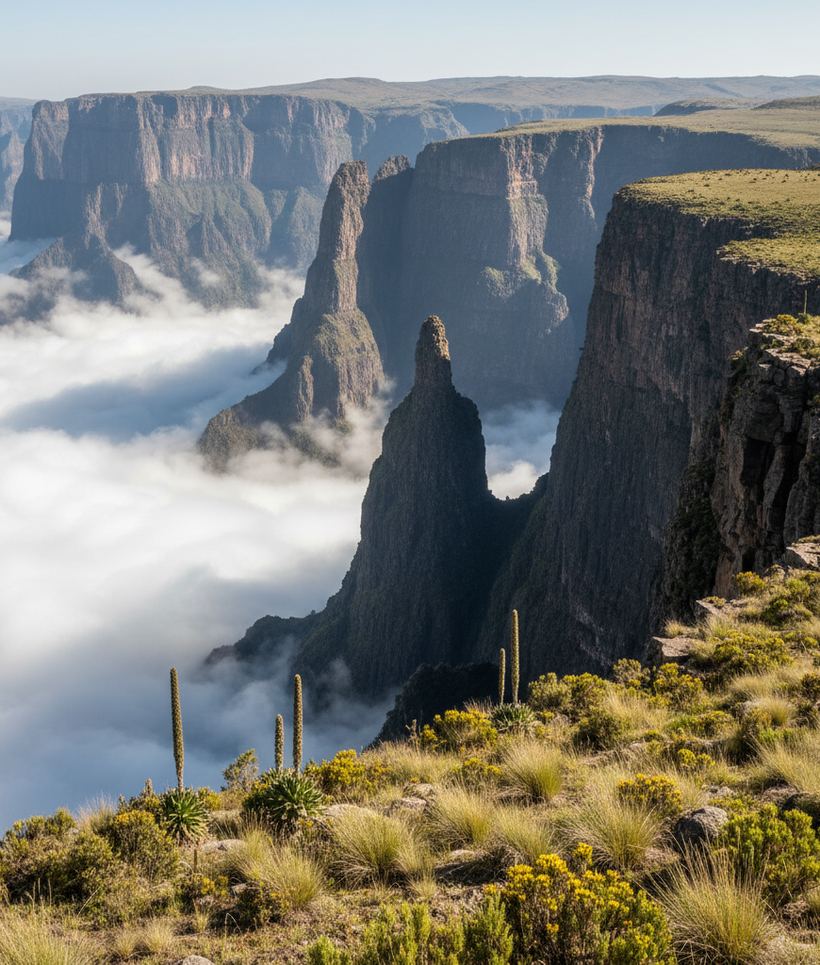
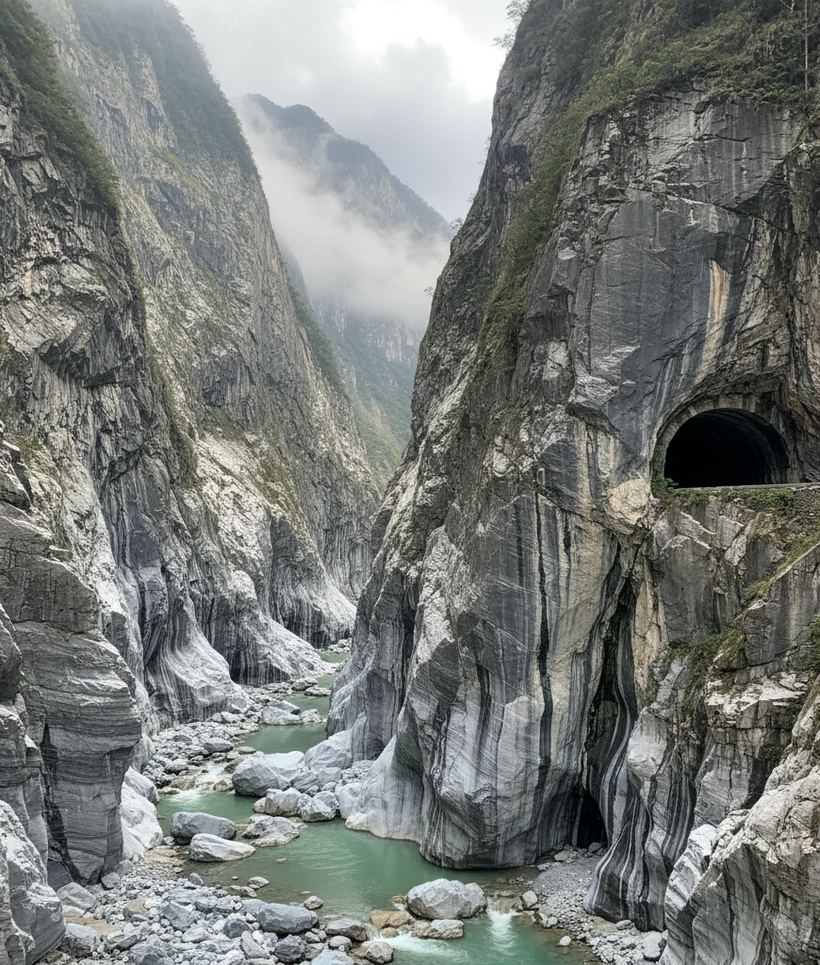
The same $3,420 somewhere else entirely
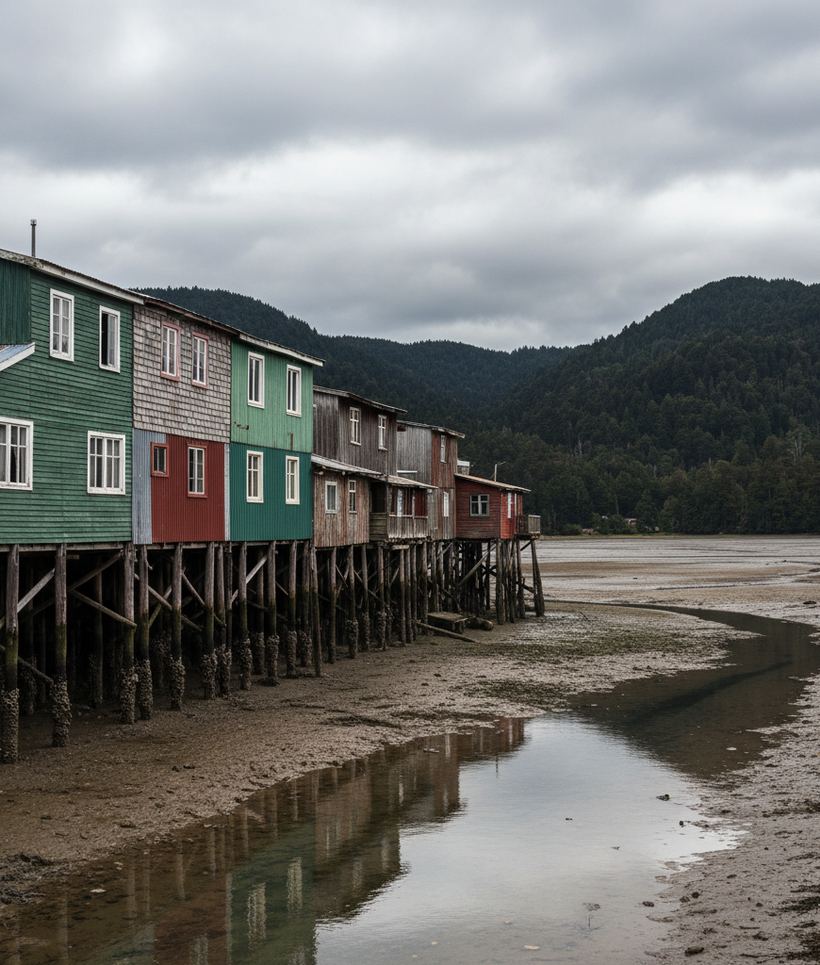
These 3 cost exactly what this one costs, and resemble it in nothing else. That is the point of filing a catalogue by figure. The office sets them out and leaves the choosing to you.
Start from the figure you actually have
Requests are taken every hour of every day. A person reads what this collects and writes back inside one business day. Money never changes hands here, and this office holds no card details of yours at any stage.
Orchard and Oar Bookings LLC
1401 E Broward Blvd, Suite 305Fort Lauderdale, FL 33301
+1 (954) 522-3140Calls run one way only: this office answers what reaches it and starts nothing of its own, by voice or by message.
reservations@orchardandoar.com
No opening times are posted. What is promised instead is the wait: a written request is answered inside one business day, and that is the undertaking the office will be held to.